Data information
Summary
Internal concept document outlining the MOTH map‑based vehicle discovery system.
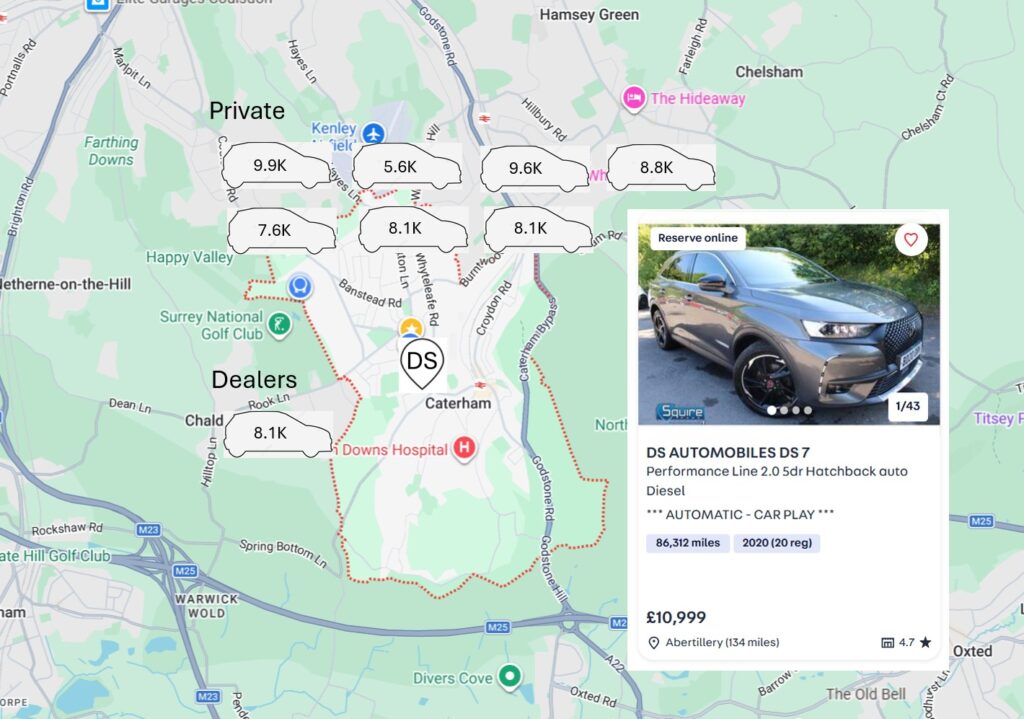
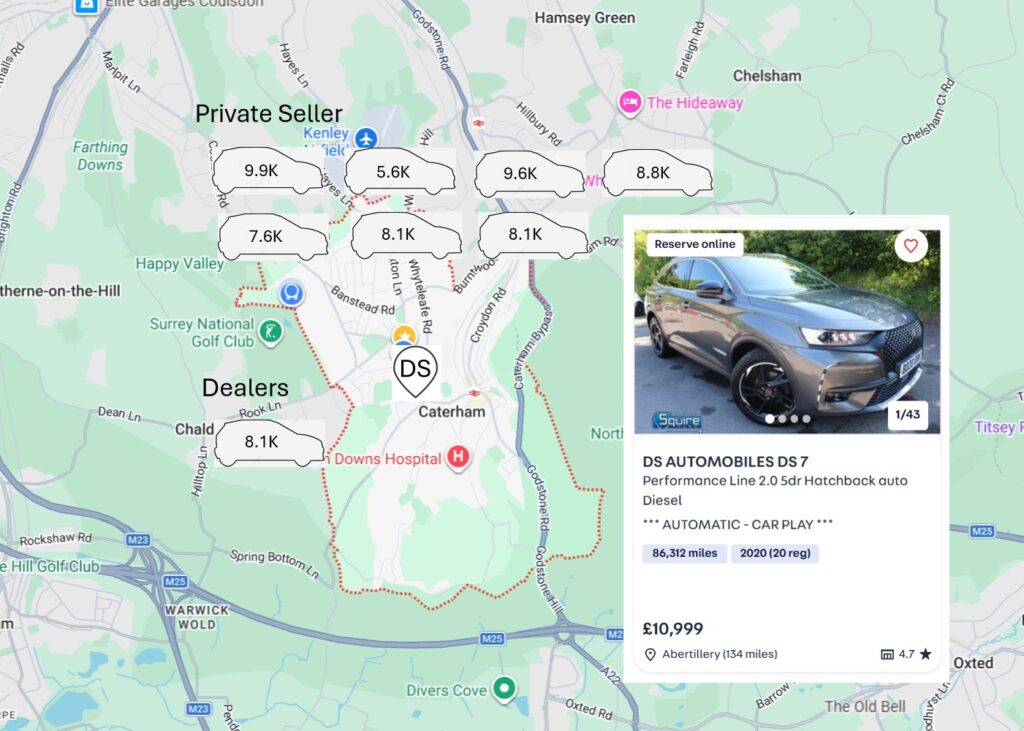
Location search replaces — or works alongside — traditional list‑based browsing with a clean, map‑first interface. Users explore vehicles spatially by area, brand, model, or dealer using a unified visual system built around simple markers, dealer pins, clusters, and layered map modes.
MOTH is a location‑driven vehicle discovery platform designed to simplify how users find cars. The system uses geographic context, brand hierarchy, and clean visual markers to present inventory clearly and intuitively.
Introduction
Car marketplaces overwhelm users with dense lists and clutter. MOTH introduces a spatial browsing system where vehicles are discovered visually on a map, making inventory easier to understand and navigate.
The Issue With Current Marketplaces
Traditional car marketplaces — especially Auto Trader — rely entirely on list‑based browsing. Users scroll through pages of results, each showing a car, a price, a postcode, and a dealer name. But none of this shows the buyer where the car actually is.
To understand location, every buyer must manually:
open a listing
copy the postcode
paste it into Google Maps
check distance
check travel time
check the route
decide if it’s worth visiting
This happens for every single car they consider.
It’s slow. It’s repetitive. It’s friction.
Auto Trader provides filters like “within 50 miles”, but this still doesn’t show:
which areas have clusters of cars
which towns have better inventory
which dealers are close together
how listings relate geographically
how far cars are from each other
how far cars are from the buyer
The marketplace becomes flat, linear, and blind to geography.
Equipment
Clean base map
Car silhouette markers
Dealer pins with initials
Manufacturer badges
Cluster system
Listing cards
Highlighted area boundaries
Detailed Description
Map Layers
Base Map: Clean geographic foundation.
Manufacturer Mode: Brand badges at high zoom.
Model Mode: Clusters of a single model.
Listing Mode: Individual cars with prices and photos.
Marker System
Private Seller Marker: White car silhouette + price.
Photo Marker: Car silhouette + attached listing photo.
Cluster Columns: Regimented multi‑listing groups.
Expanded Cluster View: Tap to reveal listings.
Dealer System
Dealer Pin: Bold pin containing dealer initials.
Inventory Count: Number of matching cars.
Linking Line: Connects dealer to inventory.
Dealer Cluster: Only relevant cars shown.
Area Highlighting
Boundary outlines for defined search regions.
Zoomed‑in view reveals listings inside.
Search Modes
Browse All Cars: Manufacturer Mode.
Browse by Model: Model Mode.
Browse by Listing: Listing Mode.
Findings / Summary
The map‑first approach provides clarity, reduces cognitive load, and improves user navigation. Dealer integration becomes more intuitive, and private listings remain visually consistent. The unified visual language ensures scalability and readability.
Conclusion
Delivers a modern, map‑native browsing experience. It simplifies vehicle discovery, enhances dealer visibility, and provides a clean, structured interface for users.
Why Map‑Based Search Solves This
A aided list system instantly removes all location friction. You list you car you like with distance willing to travel, then you open the map to browse this way.
cars appear exactly where they are
clusters show inventory density
dealer pins show stock levels
linking lines show dealer relationships
users understand the market visually
tapping a marker opens directions immediately
It becomes:
faster
clearer
more intuitive
more modern
more aligned with how people already browse property (Rightmove)
You said it yourself: “A map makes the whole market make sense.”
Results
A complete visual system ready for prototype development and BaseZero integration.
Image references – Top
1.1
Image references – Bottom gallery
1.2,1.3.1.4
External references
Google maps, API, AI