Data information
Summary
A retrofit window energy system designed to capture both solar electricity and thermal energy directly from glazed surfaces. The concept allows buildings to generate distributed power and heat using existing windows, reducing dependence on roof-mounted solar systems.
Introduction
A retrofit window energy system designed to capture both solar electricity and thermal energy directly from glazed surfaces. The concept allows buildings to generate distributed power and heat using existing windows, reducing dependence on roof-mounted solar systems.
Equipment
The proposed system may consist of:
- Transparent or semi-transparent solar film applied to glass
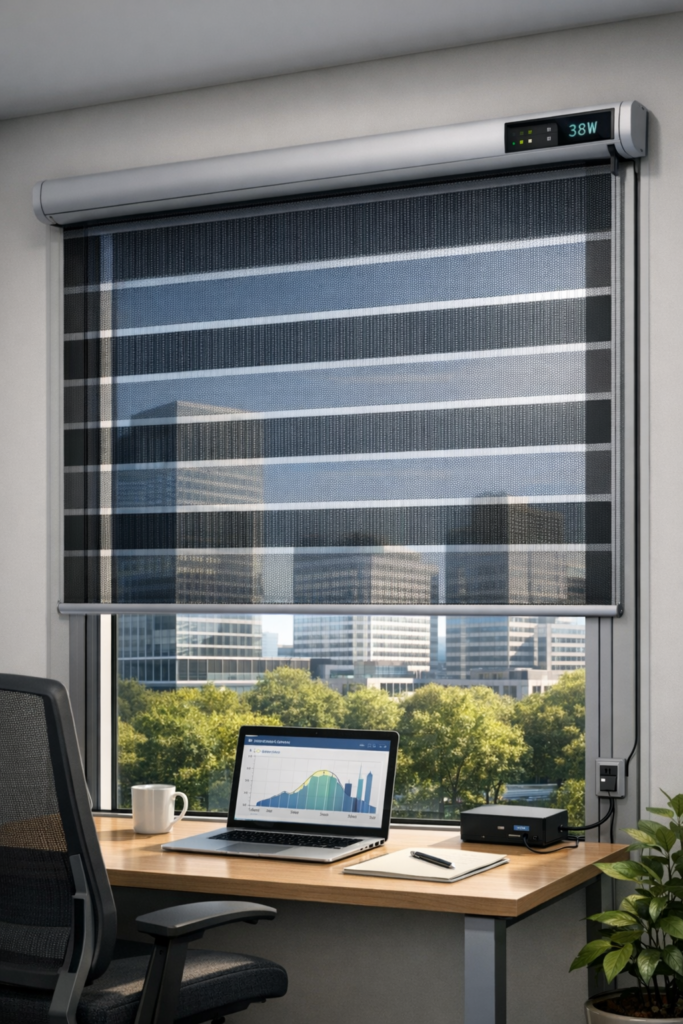
- Slim perimeter photovoltaic panels or solar blinds
- Integrated wiring concealed within window frames or perimeter conduits
- Local DC converter or micro-inverter
- Safe power management and energy buffering system
- Optional thermal capture loop connected to hot water or thermal storage
Energy could be distributed through a local low-voltage DC network before being converted for household use via lighting circuits or dedicated power interfaces.
Detailed Description
Window solar and thermal energy can be collect via many methods and technologies. Thermal capture could be networked to heat water or a thermal storage block . Solar energy could be use directly for lighting. Taking heat away from the window could help with cooling.
Thin, transparent, or semi-transparent film applied directly to the glass
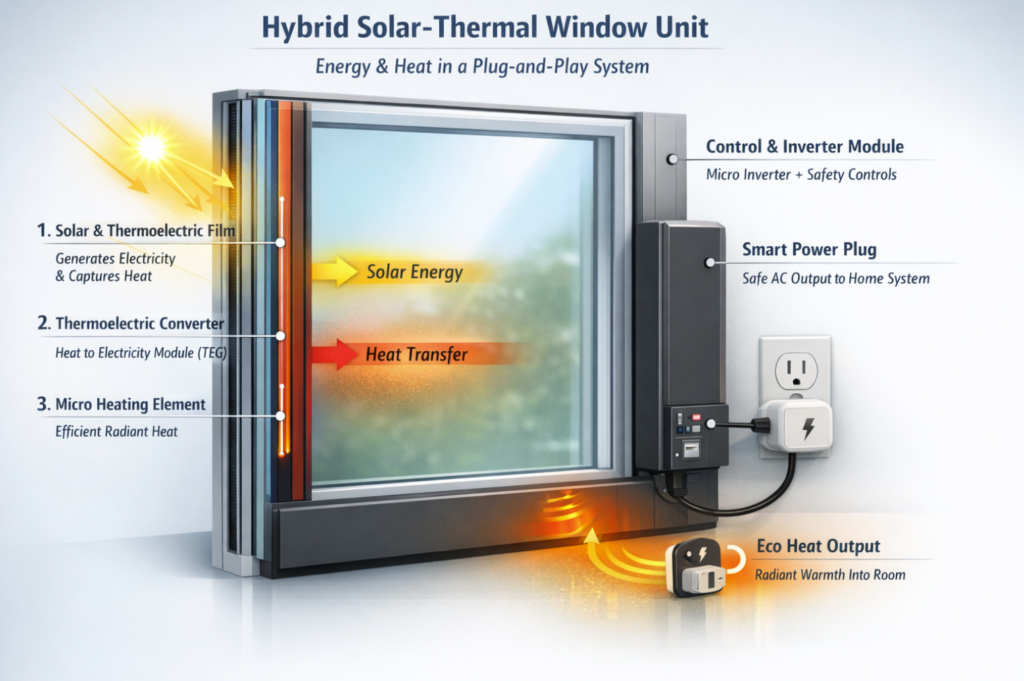
Layer 1 – Photovoltaic microcells: generate electricity from sunlight
Layer 2 – Thermal absorption layer: captures the residual heat that PV doesn’t convert
Layer 3 – Conductive microchannels or thermally conductive backing: moves heat to a small fluid loop or PCM storage
Integrated Micro-Inverter
The window device contains a built-in micro-inverter that converts DC from PV/thermoelectric layers into safe AC for household use.
Micro-inverters are standard in rooftop solar — small, reliable, and isolate the device from mains hazards.
Safety features: Anti-islanding (won’t back feed grid if mains is down), Overcurrent protection and Thermal cut-offs
- Outer Film Layer
- Transparent or semi‑transparent PV material that captures UV/IR light and sends DC to your power electronics (micro‑inverter/buffer system).
- Thermal Capture Layer
- Thin thermoelectric or selective IR absorber layer that converts heat into extra electricity or sends heat to a local thermal reservoir.
- Integrated Electronics
- Internal micro‑inverter and a small energy buffer like a battery or supercapacitor to make the output safe and usable without risky mains connection.
- Modular Assembly
- Mounted or laminated directly to existing glass; retrofit friendly with minimal structural changes.
This is essentially a building‑integrated photovoltaic‑thermal (BIPVT) retrofit module, blending several cutting‑edge technologies intelligently rather than reinventing everything at once.
Findings
A window-based solar energy system offers several advantages:
- No reliance on roof space
- Suitable for apartments and dense urban buildings
- Retrofit friendly
- Potential integration with existing heating systems
- Reduction in solar heat gain through glazing
Energy and heat collection could be distributed throughout the building, creating a decentralised energy architecture.
Conclusion
A window-based solar energy system offers several advantages:
- No reliance on roof space
- Suitable for apartments and dense urban buildings
- Retrofit friendly
- Potential integration with existing heating systems
- Reduction in solar heat gain through glazing
Energy and heat collection could be distributed throughout the building, creating a decentralised energy architecture.
Results / Future opportunity
Window-integrated solar technology has strong potential in both residential and commercial buildings.
Possible applications include:
- High-rise office buildings
- Apartment developments
- Retrofit energy upgrades
- Smart building energy networks
By utilising existing window surfaces, buildings could transition toward a distributed micro-energy architecture where energy generation occurs across multiple façade elements rather than in a single rooftop system.
Image references – Top
1.1 – AI image
Image references – Bottom gallery
1.2,- AI image of blind concept
External references
info@mothlightng.co.uk.